
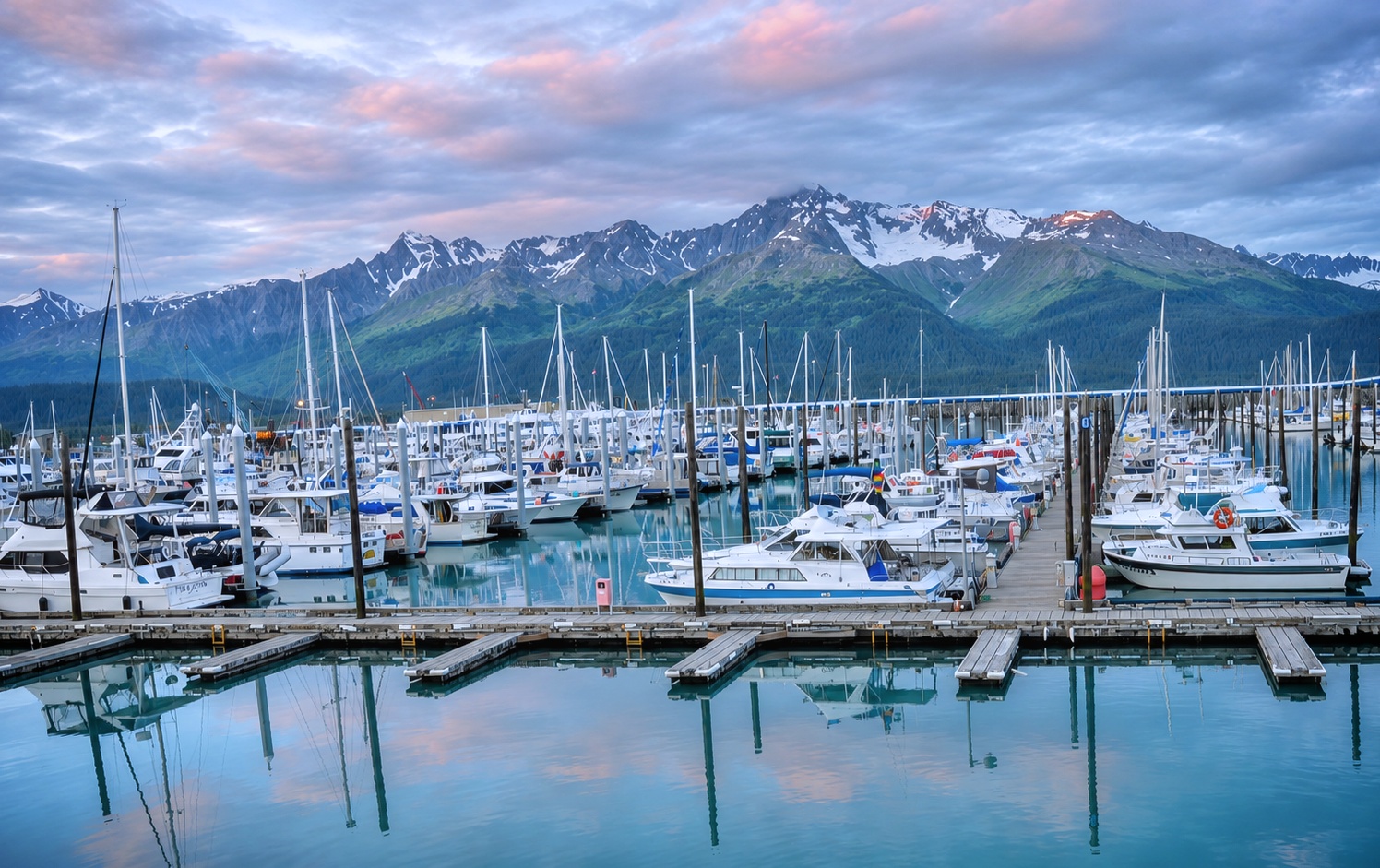
Leaning over the railing, I held my coffee and looked out over the harbor in Seward, Alaska. Steam rose past my face as the fishing boats rocked against the floating docks, their mooring lines drawing tight and then sagging again. A gull called from the roof of a wheelhouse. The air smelled of salt and diesel, and across Resurrection Bay, morning sunlight picked out the snow still tucked into the south-facing summits of the surrounding peaks. I was just about to board a boar for an all-day journey deep into Kenai Fjords National Park.
By the time we pulled away from Seward, the sun had warmed the rail enough that I could feel the heat in my palms. Beyond the harbor, Resurrection Bay opened between dark slopes of spruce.
Out beyond the bay, the boat rose and fell on a long swell. The water turned a deep inky teal, almost a bluish-black, and the wake unrolled behind us in two white lines, that flashed vibrant turqoise for an instant before breaking into white foam.
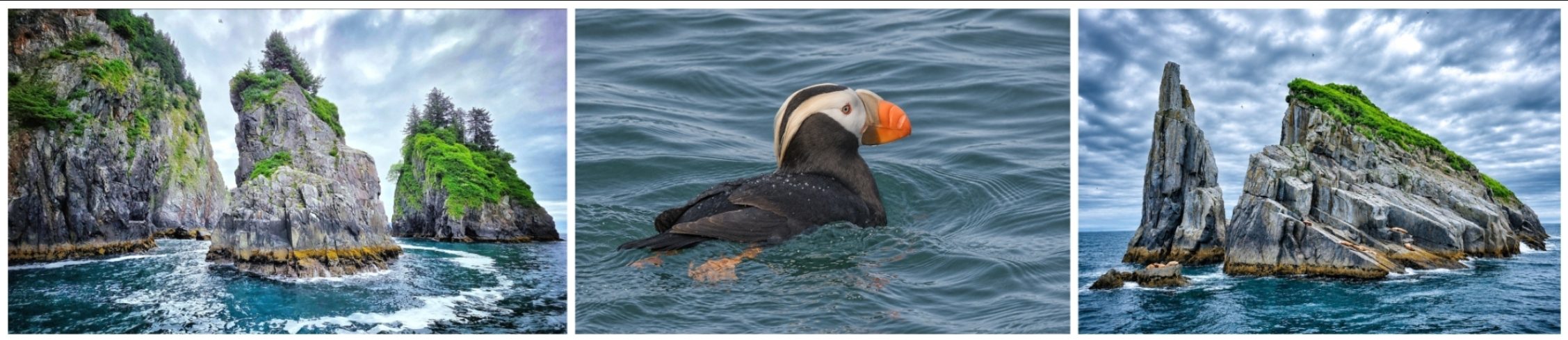
A tufted puffin sat low on the water, its orange bill bright enough to catch my eye from across the deck. It leaned forward and disappeared. I kept watching the spot where it had been, and when it surfaced well off to one side. Puffins propel themselves underwater with their wings, steering with their feet. After watching that one dive, I could almost follow its route beneath the surface.
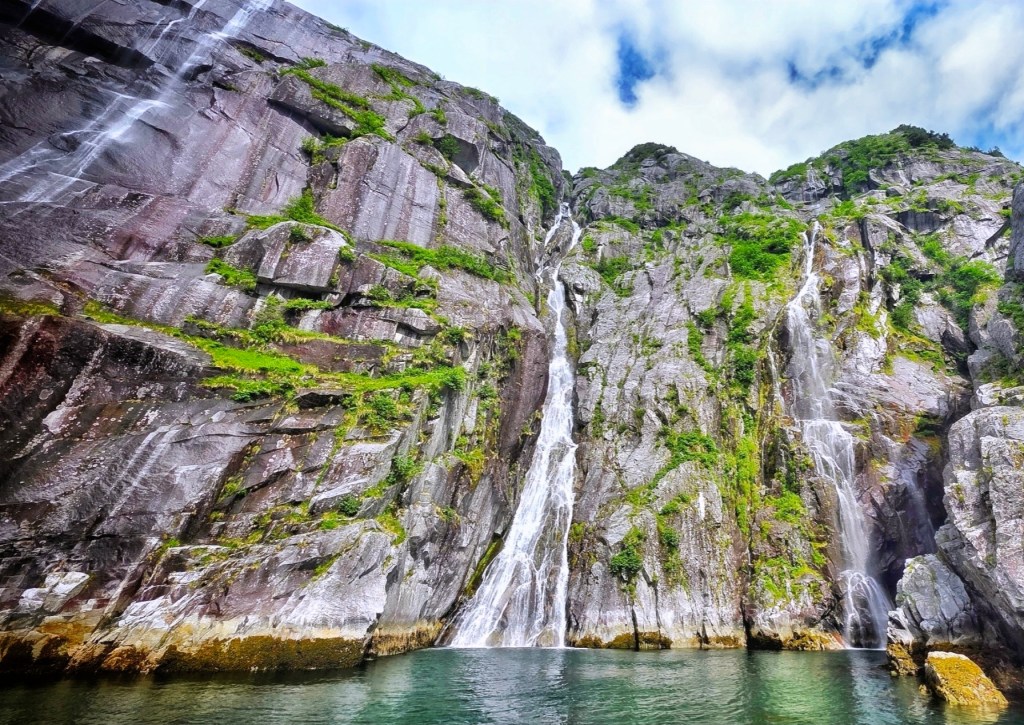
By late morning we were inside Northwestern Fjord, where the water took on the cloudy green of sea glass. The walls rose steeply enough that I had to lean back to see where they ended. Meltwater spilled from snowfields high above us, gathered in cracks, and came out over the ledges in white ribbons. One waterfall struck a shelf halfway down and spread into a fan so fine that the breeze blew it sideways. At the foot of the cliff, the spray drifted out over a narrow strip of black gravel. In the sun I could see individual drops hanging in the air.
The shoreline changed as we went deeper. In some places, alder crowded the mouths of streams, its leaves bright against the damp stone. Elsewhere, great sweeps of bare rock ran right down into the water. Pale bands curved across the faces, interrupted by dark seams and ledges where loose stone had collected. From a distance, some of those ledges looked wide enough to walk along. Then a gull crossed in front of one and showed me how badly I’d misjudged the scale.
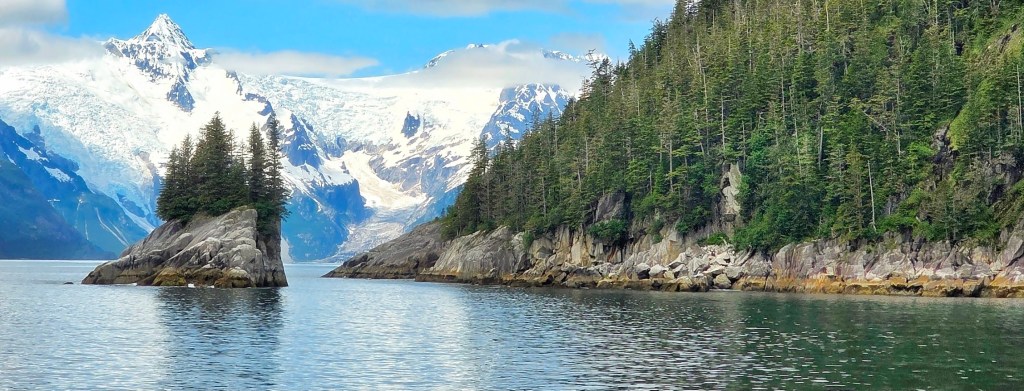
The first piece of floating ice I noticed was clear and about the size of a loaf of bread. It rolled in our wake, and for a moment the sun shone straight through it. Farther in, broad white slabs lay among smaller fragments, their edges worn into scallops. A few carried streaks of gray sediment. I could still feel the sun on the back of my neck, but the air coming down the fjord had grown cold. When the captain eased off the throttle, I heard the small pieces of ice tapping against one another.
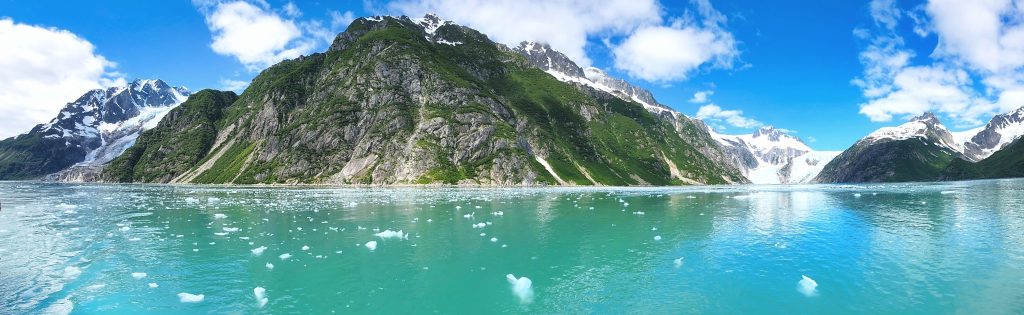
Through binoculars, I found a harbor seal on a small iceberg. Its mottled back was the color of a wet beach stone. Another seal lay farther in with its hind flippers lifted clear of the water. Harbor seals use floating ice near tidewater glaciers as a place to rest. I watched the second seal make small adjustments as its floe rocked, then settle again, belly down in the sun. Behind it, meltwater darkened the rock at the base of the cliffs.
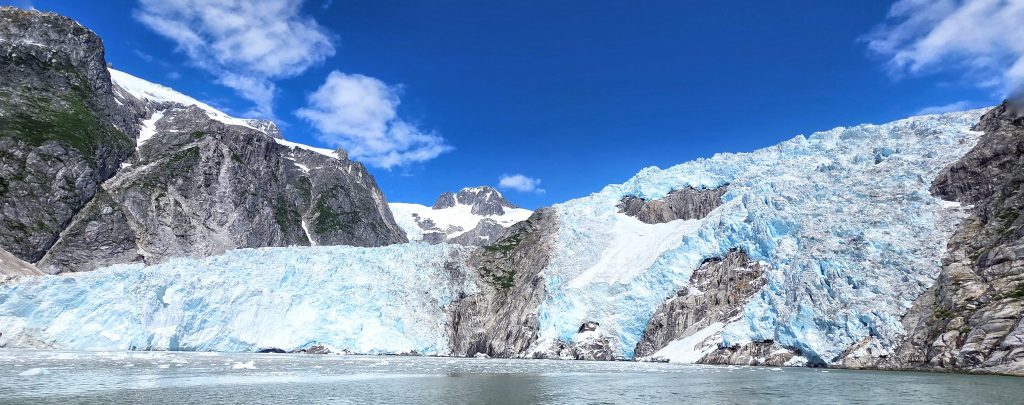
At the head of the fjord, Northwestern Glacier rose in a jumble of leaning towers and deep crevasses. The ice facing the sun was chalky white. Inside the cracks it shaded from pale blue at the edges to a darker blue where I could no longer see the bottom. I tried to follow the glacier uphill toward the Harding Icefield, where accumulated snow compacts into the ice that feeds it. The folds in the glacier hid one stretch after another. From the boat I could see only the last part of its descent.
A dry crack came from the face of the glacier. I looked up in time to see a narrow slab tip forward and break apart in the air. White spray rose against the blue ice. Then the sound reached us, a low report that rolled along the rock walls. A swell spread across the basin. I could track it by the way the floating ice caught the sun, one piece tipping and flashing after another.





Leave a Reply